
What You Will Master
Evaluate arguments for logical fallacies, bias, and strength of evidence.
Question assumptions and think independently rather than accepting information blindly.
Analyze complex problems from multiple perspectives and frameworks.
Distinguish between correlation and causation, facts and opinions, data and interpretation.
Make better decisions using structured analytical frameworks and evidence-based reasoning.
Apply the Socratic method and philosophical inquiry to everyday questions.
Recommended Tracks
Junior
Foundations of Critical Thinking through sensory and logical play.
Explorer
Skill-building and guided Critical Thinking projects with AI support.
Advanced
High-level Critical Thinking specialization and elite problem solving.
Sample Modules
Module 1: Critical Thinking Fundamentals
Module 2: Analyzing Arguments & Detecting Fallacies
Module 3: Evaluating Evidence & Sources
Module 4: Cognitive Biases & Logical Errors
Module 5: Structured Decision-Making Frameworks
Module 6: Philosophical Inquiry & Socratic Method
Earn Elite Rewards
Every milestone in Critical Thinking earns you exclusive badges and ranks on the global leaderboard.
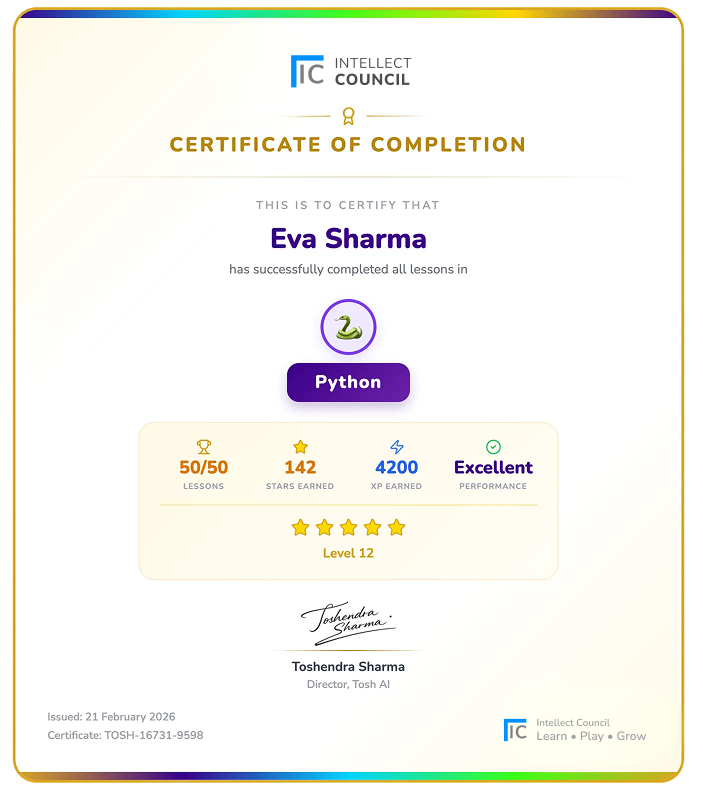
Earn Your Intellect Council
Certification
Every Critical Thinking milestone you conquer at Intellect Council results in a verified Certificate of Completion. Share your skills directly to LinkedIn and add them to college applications.
Critical Thinking Specialization FAQ
What age is Critical Thinking best for?
Critical thinking develops best from ages 8–17. Younger kids learn to question "why"; older students master formal logical analysis and philosophical reasoning.
Why is critical thinking important?
In an age of misinformation and AI-generated content, critical thinking is essential. It helps kids evaluate what's true, make smart decisions, and think for themselves.
How is this different from Logic?
Logic focuses on formal reasoning patterns; Critical Thinking applies reasoning to real-world arguments, information, and decisions. Both complement each other.
Will this make my child question everything?
Healthy skepticism yes, but not cynicism! We teach constructive questioning, evidence-based evaluation, and intellectual humility alongside critical analysis.