
What You Will Master
Become proficient in professional software: Google Workspace, Microsoft Office, collaboration tools.
Understand digital privacy, online safety, and protecting personal information.
Navigate misinformation, fact-check sources, and think critically about digital content.
Master digital etiquette, professional online communication, and building positive digital presence.
Learn responsible AI use, algorithmic awareness, and ethical technology decision-making.
Understand digital careers, remote work tools, and the future of work in a digital-first world.
Recommended Tracks
Junior
Foundations of Digital Literacy through sensory and logical play.
Explorer
Skill-building and guided Digital Literacy projects with AI support.
Advanced
High-level Digital Literacy specialization and elite problem solving.
Sample Modules
Module 1: Professional Tools & Digital Workflows
Module 2: Online Safety, Privacy & Cybersecurity Basics
Module 3: Misinformation, Fact-Checking & Media Literacy
Module 4: Digital Etiquette & Online Communication
Module 5: Responsible AI & Algorithmic Awareness
Module 6: Digital Careers & Remote Work Skills
Earn Elite Rewards
Every milestone in Digital Literacy earns you exclusive badges and ranks on the global leaderboard.
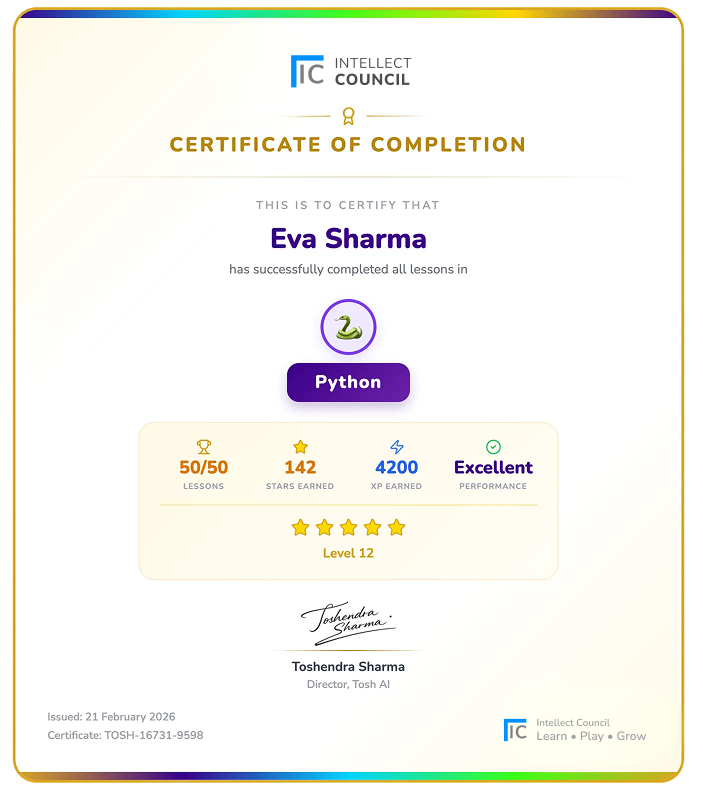
Earn Your Intellect Council
Certification
Every Digital Literacy milestone you conquer at Intellect Council results in a verified Certificate of Completion. Share your skills directly to LinkedIn and add them to college applications.
Digital Literacy Specialization FAQ
What age is Digital Literacy best for?
This specialization serves ages 8–17. Younger students focus on safety and basics; older students dive into professional tools, ethics, and digital career skills.
Isn't this just basic computer skills?
No! Digital Literacy goes far beyond typing. It includes critical thinking, online safety, professional communication, ethical decision-making, and navigating AI-powered systems.
Why is digital literacy important?
The digital world is where kids will work, communicate, and live. Digital literacy teaches them to navigate it safely, ethically, and effectively—skills as essential as reading and writing.
How is this different from coding?
Coding builds applications; digital literacy teaches how to use, evaluate, and navigate technology responsibly. Both are valuable, but serve different purposes.