
What You Will Master
Master physical geography: continents, countries, capitals, oceans, and landforms.
Understand climate systems, ecosystems, and environmental geography.
Explore cultural geography: languages, religions, traditions, and global diversity.
Analyze geopolitics, international relations, and global current events.
Use maps, GIS technology, and spatial thinking for problem-solving.
Develop global citizenship mindset and cross-cultural understanding.
Recommended Tracks
Junior
Foundations of Geography through sensory and logical play.
Explorer
Skill-building and guided Geography projects with AI support.
Advanced
High-level Geography specialization and elite problem solving.
Sample Modules
Module 1: World Geography & Map Skills
Module 2: Physical Geography & Earth Systems
Module 3: Cultural Geography & Global Diversity
Module 4: Geopolitics & International Relations
Module 5: Environmental Geography & Sustainability
Module 6: GIS, Mapping & Spatial Analysis
Earn Elite Rewards
Every milestone in Geography earns you exclusive badges and ranks on the global leaderboard.
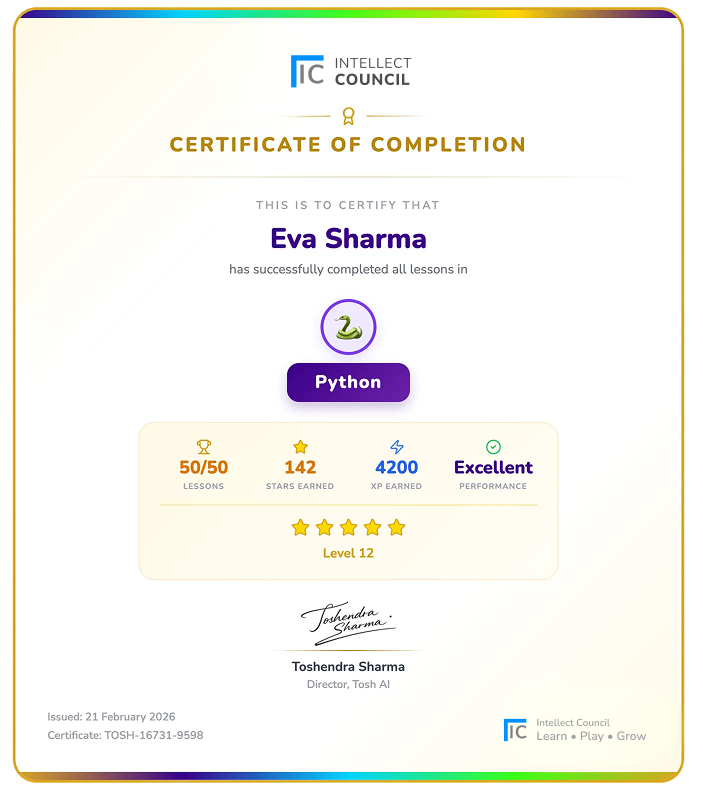
Earn Your Intellect Council
Certification
Every Geography milestone you conquer at Intellect Council results in a verified Certificate of Completion. Share your skills directly to LinkedIn and add them to college applications.
Geography Specialization FAQ
What age is Geography best for?
Geography works for ages 8–16. Younger students learn countries and capitals; older students analyze geopolitics, climate change, and global systems.
Is this just memorizing capitals?
No! While we do teach locations, geography is about understanding how places connect, why cultures differ, how environments shape societies, and global interconnections.
How does this prepare kids for the future?
Geography builds global awareness, cultural intelligence, and systems thinking—essential skills for careers in international business, diplomacy, environmental science, and more.
Does this cover current events?
Yes! We connect geographic knowledge to real-time global events, helping students understand the news and think critically about international issues.