
What You Will Master
Break down complex problems into manageable components using systematic frameworks.
Apply multiple problem-solving strategies: design thinking, first principles, TRIZ, and more.
Develop creative solutions through lateral thinking and innovation techniques.
Analyze root causes rather than symptoms using diagnostic frameworks.
Collaborate effectively on team problem-solving challenges.
Build resilience and persistence when facing difficult problems.
Recommended Tracks
Junior
Foundations of Problem Solving through sensory and logical play.
Explorer
Skill-building and guided Problem Solving projects with AI support.
Advanced
High-level Problem Solving specialization and elite problem solving.
Sample Modules
Module 1: Problem-Solving Fundamentals & Mindset
Module 2: Systematic Problem-Solving Methods
Module 3: Design Thinking & Creative Problem Solving
Module 4: Root Cause Analysis & Diagnostics
Module 5: Team Problem Solving & Facilitation
Module 6: Complex Multi-Variable Challenges
Earn Elite Rewards
Every milestone in Problem Solving earns you exclusive badges and ranks on the global leaderboard.
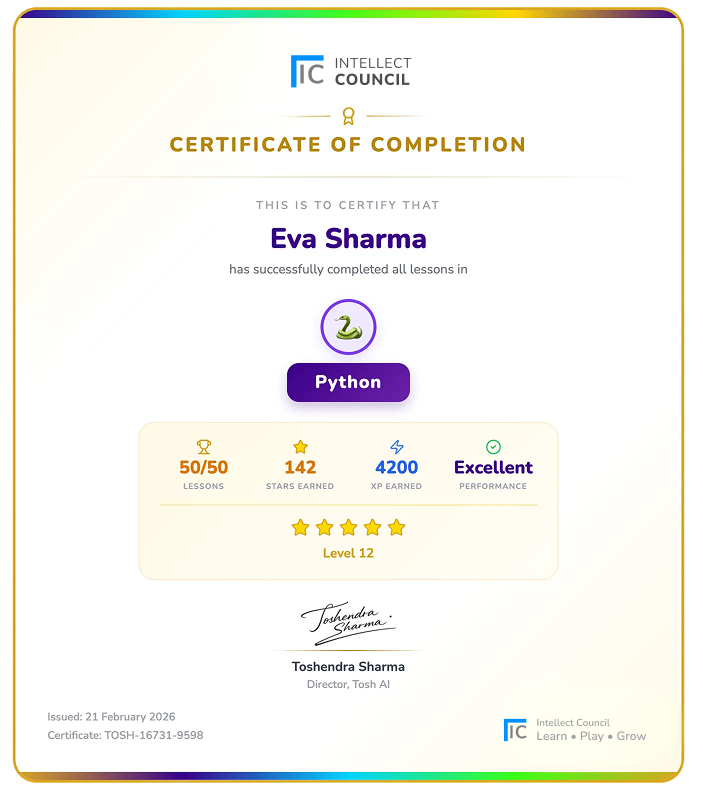
Earn Your Intellect Council
Certification
Every Problem Solving milestone you conquer at Intellect Council results in a verified Certificate of Completion. Share your skills directly to LinkedIn and add them to college applications.
Problem Solving Specialization FAQ
What age is Problem Solving best for?
Problem solving skills develop from ages 7–17. Younger students start with structured puzzles; older students tackle open-ended, real-world challenges.
How is this different from Logic or Critical Thinking?
Logic is pattern-based reasoning; Critical Thinking evaluates arguments; Problem Solving applies these skills to create solutions. All three complement each other powerfully.
What kind of problems will my child solve?
Everything from classic puzzles to real-world challenges: engineering problems, business cases, social issues, environmental challenges, and creative design problems.
Does this help with standardized tests?
Yes! Strong problem-solving skills transfer to all test formats. Students learn to stay calm under pressure and systematically work through unfamiliar questions.